
Notifications
Clear all
Deck Stain Questions and Answers
1,070
Posts
361
Users
12
Reactions
702.3 K
Views


21/07/2026 10:39 am
@deckstainhelp
So sanding cedar with 60 grit on an orbital results in no raised fibers? Everywhere else I read that 60 is rough on cedar and you want to knock down those roughed-up areas (remove the furring) with a higher grit to get a smooth(er) finish.
Don't mean to challenge you, just trying to understand. Thanks.
Topic starter
21/07/2026 10:49 am
@eelefter99 The furring 100% happened from the SW stripper. Sanding never creates furring, but removes it when done correctly.
22/07/2026 3:55 pm
Just got off the phone with the contractor. He said "sanding with 60 grit is going to create fuzzies" and also "I did everything I could to get rid of them. Cedar is a softwood, it always has fuzzies. I only stained when the boards looked smooth, so the fibers must have raised after I applied the stain," which doesn't make sense to me.
Is there any truth to that?
He's coming over at the end of the day to have a look at it and to get paid or not.
Regarding payment, he basically said "anything you want to do is fine." He's not a bad guy, that's not at question here. He painted the exterior of our home a couple of years ago, did a great job at a fair price.
I really value your expertise and experience. Any insight would be great. Thank you very much, Scott.
Topic starter
22/07/2026 8:46 pm
No, he's wrong or inexperienced. As I said, the stripper caused the furring/fuzzies. Not the sanding or the stain afterward. He did not sand them off fully, and in his defense, he may not have been able to see them when the wood was dry. Painters are not always deck restoration experts, or vice versa. For example, you would not want me painting your house. 🙂
23/07/2026 11:56 am


These boot prints and orbital sander artifacts are localized in 2 separate areas. Contractor says he will remove them via gentle sanding and then restain those areas with a cloth to avoid laplines and achieve blend.
Is this good thinking or might it make things worse?
Regarding the saturated furring that resulted in a blotchy appearance...I'm assuming you recommend that I just live with it and learn to love it...or at least hate it less?
Thanks.

23/07/2026 3:57 pm
Hi, we are reapplying TWP100 (2 years since first application). We cleaned and brightened the deck yesterday and are waiting for it to dry. Do we need to wait 48hrs or can we apply the stain sooner? There is a slight risk of a thunder shower this afternoon. If it does rain, can we stain tomorrow? (I read that some moisture is OK with the oil based product so we'd appreciate your advice). Thanks
SE British Columbia, Canada (Rocky Mountains)
Pressure treated deck (10 years old, previously treated with TWP100 2 years ago).
Topic starter
23/07/2026 6:25 pm
@eelefter99 We have never been very successful at spot sanding/preppign and then having the stain blend. Does not hurt to try, though.
It is just cosmetic and is not long-term, as it will go away when you redo. Maybe put a rug or some furniture over the bad spots?
23/07/2026 7:18 pm
@deckstainhelp Thanks! We really appreciate your prompt and knowledgeble reply!

24/07/2026 12:46 am
Hi Scott;
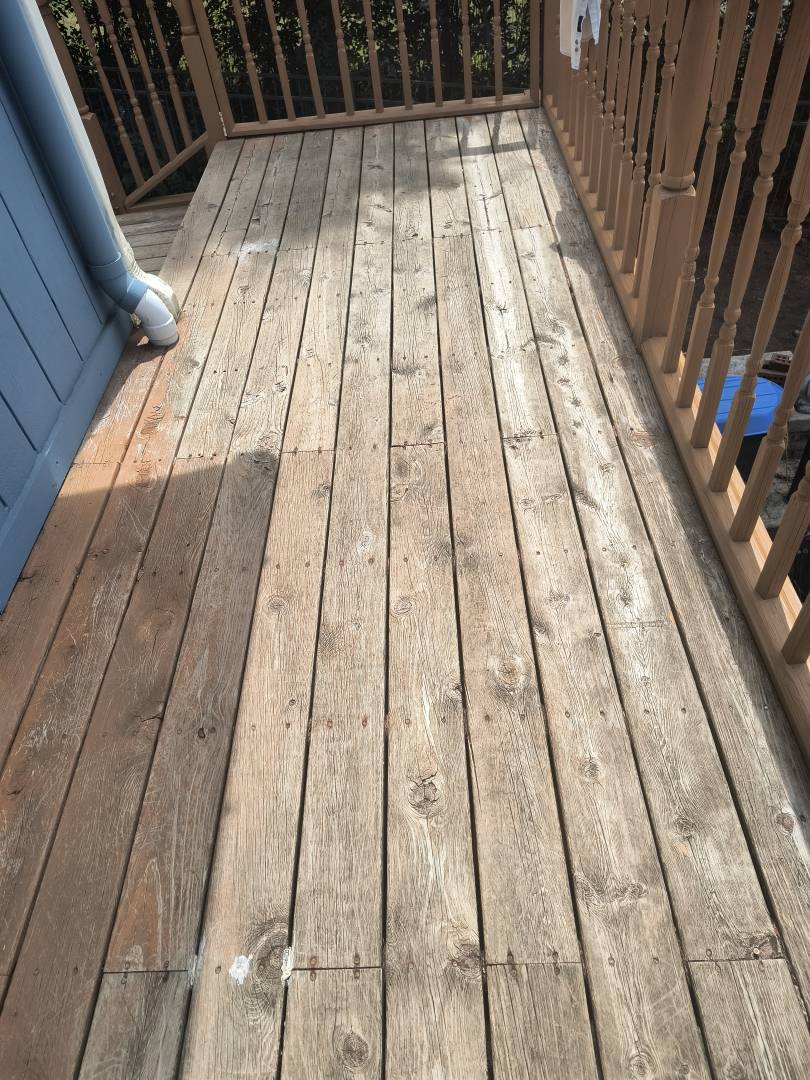
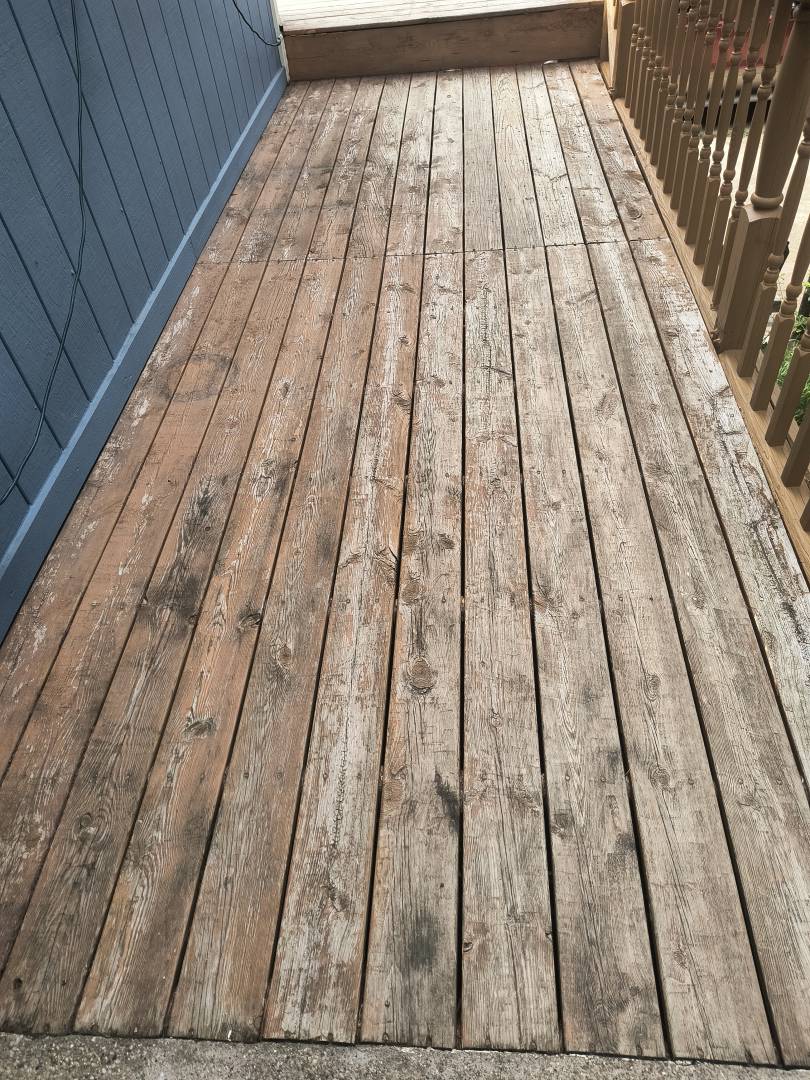
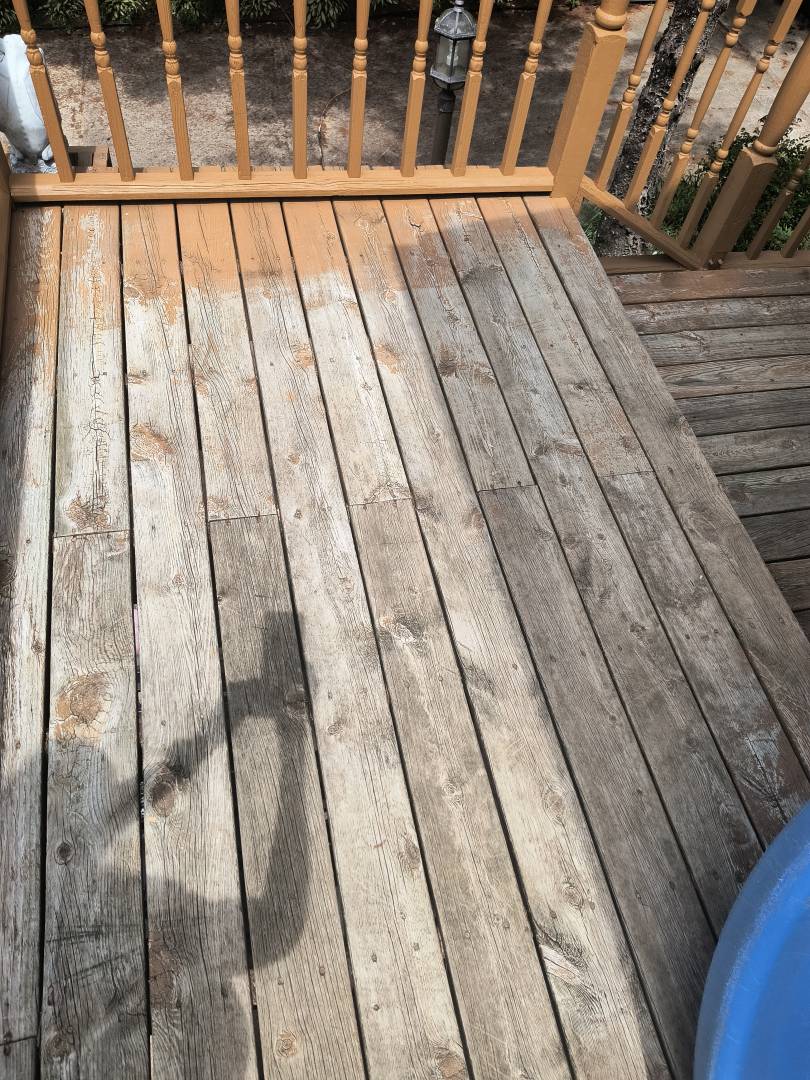
We have an old deck of treated pine. The deck boards are in decent shape. Two years ago we put on a semi-solid (Cabot) deck stain that seemed to have vanished, except for outlier boards that don't get any traffic (we have five dogs). I'll upload photos. Since most of the semi-transparent stain is gone, could we get away with not having to strip?
Topic starter
24/07/2026 11:36 am
No, you have to strip. Plus, what is on your railings looks fully opaque, not semi-trans or semi-solid. You would need to strip the paint here unless you want to use a solid opaque stain there.
miasmom reacted

20/08/2026 12:51 am
Scott,
Trying to decide whether to use TWP 1500 stain or the Restore-A-Deck semi-transparent stain for new deck (almost a year old). How long does it take for TWP 1500 stain to dry? TWP product data sheet says "Watch local weather forecasts BEFORE applying this stain to assure there is no rain 2-3 days after application." I read that rain will damage the oil based stain finish. Therefore, I'm concerned with going with the TWP stain and leaning towards using the Restore-A-Deck semi-transparent stain.
Questions regarding use of the Restore-A-Deck cleaner and brightener kit.
Is there any concern if either the cleaner or brightener is accidentally sprayed on the deck's (less than a year old) powder coated black aluminum balusters and black Nylon deck railing kit?
Restore-A-Deck cleaner instructions say to apply it with a pump-up sprayer. However, can the cleaner be added to the contractor's pressure washer instead so that it can be applied during the soft wash, or does the cleaner need to sit on the wood prior to soft washing with pressure washer?
Is there a recommended maximum pressure to use when soft washing with pressure washer?
I will be applying the brightener. Can I use a garden hose to rinse off the brightener?
Thank You!
20/08/2026 10:04 pm
If you were in my shoes and would be hiring a contractor to stain the new deck (about 10 months old), would you go with the TWP 1500 stain (TWP 100 is not allowed in Virginia) or the Restore-A-Deck semi-transparent water based stain? I read your reviews and you rated both stains very highly. However, I would appreciate it if you can tell me why you would choose one of these over the other. Thank you!
